How much nutritional wisdom do your cows have?

Have you ever heard someone state categorically that "animals know what they need to eat"?  I hear claims like this quite often.  In general I hear statements like this when we are discussing supplementary feeding programs, in particular the need for adding minerals and trace elements.

There's no doubt animals need minerals and some trace elements for their well being.  In general animals obtain the minerals and elements they require as part of their daily feed intake.

Cows on trop grasses 007 (1).jpeg

In most circumstances the feed cattle eat each day has enough of minerals and trace elements to satisfy the animals needs.  

There is another way cattle obtain them in their diet.  Thats through the soil.  I remember being told in a lecture from a vet that cattle eat roughly about 1kg of soil a day!

It makes sense when you think about it.  If plants are pulled out from the soil during grazing, some soil will make its way inside!!  Fortunately it comes out in the dung!

In that process cattle can access some of the minerals that may not be available form the feed itself. 

Having said all that, there are times when the plants or the soil can't supply the minerals and elements cattle need.  

So, do cattle know they need to have these minerals and elements, and will they actively search for them?  Many people say that cattle will do this.  They use plenty of examples to demonstrate this position.  

In my experience and from many years working with researchers, I'm not so sure.  I reckon my position is best summed up in this picture.

Screen Shot 2014-10-08 at 4.31.42 pm.png

More recent research suggests that animals will look for particular minerals, but only when they have been deliberately depleted of that mineral and when the deficiency is major.  It seems that when the deficiency is minor, the animals don't know they are missing it and don't go looking for it!  

So what does this mean for producers designing feeding programs?  I reckon it means that in the short term, deficiencies are not recognised by animals, and you can't expect them to go and eat a supplement to correct the problem.  If you do want them to eat something, its more likely they will go to something they are used to eating, suck as a block.  This is why sulphur blocks work quite well on some forage crops.  

In the long term, deficiencies like calcium and phosphorus seem to be felt more by the animal.  In these longer term deficiencies, animals do seem to look for options to address the absence of these minerals. This is when cattle will lick the soil, and in many cases chew bones. 

While its easy to think they know that chewing bones is a result of nutritional wisdom, most researchers think its more likely that they do it because it makes them feel better.  

image.axd.jpeg

There is one big exception to this!  And its the need for sodium, in other words, the need for some salt.  

We know there are some specific metabolic needs that will trigger the animals brain to crave salt.  When this happens you will see cattle licking the ground or looking for salt deposits.  

It was actually this behaviour that first made people think cattle possessed nutritional wisdom.

So what does this mean at a practical level?  I reckon the first thing is to realise your animals are not smart enough to choose their specific mineral needs in the short term.  Its up to you to monitor your animals and ensure they are not deficient.  

You also need to think of how you supply your animals needs.  Don't rely on the animals to pick and choose.  If there is a deficiency in your animals intake, then design a program that will actually correct it quickly and effectively.  In the long run it will be much more cost effective.

Cattle at feed trough_0.JPG

I reckon the final thing is don't have a guess! If you're not sure about your cattle and their nutritional needs, get some advice.  If you don't have nutritional wisdom, just remember your cows can't tell you what they need either!

Do you have a goal for your business?

In the last few weeks I've met a few people who have talked to me about their "5 year plan".  These are people who have set some goals in their lives for where they would like to be.  For one person it was a location they wanted to live in, and a business they wanted to operate.  For another it was a qualification and profession they were aspiring to.

These people have been great to meet and share a few ideas with.  I reckon I'm very fortunate in having the opportunity to work closely with plenty of farmers to help achieve their goals or even contribute to their "5 year plans!"

DSC00068.JPG

What I've learnt is setting goals is important for every business.  It doesn't matter if you operate a part time farm enterprise; or your entire income is derived from the farm, setting goals is essential.  

I was recently asked why are goals essential?  

It is really quite straight forward.  A goal gives you a direction to aim for.  It lets you develop practical strategies, the on farm actions that you can follow and hopefully avoid making mistakes that cost you money.

A goal give you a purpose for on farm recording; for focussing on improved management skills or even for developing new skill sets.  Without that purpose you can spend a lot of time recording data, going to courses and workshops or moving cattle around for little practical return.

I know that this doesn't sound like rocket science!  However the number of people I have had a chance to meet and work with, who are carrying out activities for no real purpose is surprising.  

One of the benefits of working with people is bringing a fresh perspective to an operation.  There are times when I see people doing something, and I have to ask, "why are you doing this?"  There are plenty of times where the answer is "I don't know" or "because its always what we do.."  

4066844970_ae236da2d3_z.jpg

Now that's not to say that what they are doing is wrong or unnecessary!  Sometimes I ask and find the answer is that the action is important for a specific reason or program.  

But, the chance to stop and think about things for a little while is vital.  I'd encourage producers to take time, at least once every 12 months, to sit down and review a few things about their business.

First of all ask yourself:

  • What is the goal of the business. What do you want to achieve?

  • How close does the business come to achieving that goal?

  • What actions and program work best to help you achieve your goals?

  • What are you doing each day and do these things actually help you or are they a distraction?

  • Could you do things differently?

I reckon these 5 questions are quite challenging to answer.  If you are honest with yourself, you need to spend some time on each point.  Having said that, the answers you come up with can really help you focus your business to be capable of achieving your goals more efficiently.

There are plenty of people who can help you bring a fresh perspective to identifying your goals and answering these questions.  However, if you do get another opinion, make sure its from someone who will look at your goals as well as your on farm strategies.  There's not much point looking just at goals if they can't help you towards the most efficient activities.  

Finally, don't let someone convince you to change what you do each day simply to follow a trend or fad!  Make sure that they give you ideas that actually help you achieve your goals!!  

Making time to take a break

I was very tempted to not share a Rayner Reckons this week. The reason is I have actually put aside two weeks for a short break.  I know for many of my clients, the idea of taking a break or having a short holiday is just that, an idea!  

Now I'm running my own business, I understand the pressure felt by farmers and other business owners to focus on the jobs to be done; the projects that are on going and the issue of being able to actually afford some time off.  There are plenty of reasons to put off a break.

So I know there are plenty of reasons not to take a break.  I've got plenty of exciting projects happening and I'm loving working with a range of clients.  Its easy to focus on the job.  But, I also remember a few years ago during a long drought period, a farmer I knew told me how he had not left the farm in four months.  I saw him at a seminar and dinner in Armidale.  He was telling me how great it was just to be away from the place. How it was so monotonous and draining.  I really felt he was struggling with everything, and the weekend away really changed his outlook.

Now I know a weekend is only short.  But I do know how easy it is to become exhausted by work.  Being exhausted is no joke.  You make poor decisions, you build bad habits and you become careless.  

In our industry you can't afford the risk of creating bad habits or getting careless.  A simple mistake can lead to physical injury, or can contribute to poor decisions in regard to your business management or in regards to your livestock.

cows-on-beach-are-we-in-india-malindi.jpg

So in actual fact taking a break is essential. You need to get a chance to re focus and refresh and recover from the demands of work.

Thats why companies make their employees take a break each year. 

As self employed business operators, we have to be a bit more disciplined and focus on taking a break for our own safety and for the well being of our business.

Two days isn't really enough for a proper break.  In my case after three days, I'm checking emails and even on a stroll near the beach today I was looking at some clover and then I started thinking about bloat management, before considering why cape weed was kicking on so well in that particular area. So I reckon it will take a few days to properly switch off!

But I am also gaining a sense of perspective.  I'm feeling more refreshed and I know after a break I will be in a position to give complete attention to my job without bad habits possibly developing!

So if you are in the position where your last break was so long ago you can't remember it, or if you have not left the farm in months, ask yourself; 

  • What bad habits have you developed?

  • What short cuts are you taking?

  • Are you making clear and balanced decisions?

If you're in that position, I reckon it's a great idea to take a break.  It will be the best thing you can do for yourself and for your business.

holiday_time_for_dog_by_brookcresent-d4dd4f0.jpg

Im going to enjoy my break and then I'm excited about getting back into it afterwards!

Whats going on in your cow herd?

I reckon this time of the year is possibly the most frenetic for beef cattle breeders.  Spring calving is well underway, and there are plenty of people talking to me about the ups and downs of calving.  At the same time the bull selling season in northern NSW and southern Qld is dominating the minds of many producers.  Meanwhile, in the back of everyones mind is the question about what the spring will be like and if we can finally move towards a good season and a strong market.

twit1.JPG

I've been giving this time of year some thought as I travel to meet clients and attend bull sales in the north. 

A couple of things stand out for me.  Firstly it seems like 80% of the people I speak to are looking for bulls specifically to join to heifers.  These "heifer bulls" are being sought to address, in many cases, a difficult year for calving heifers.

If you are experiencing difficulty in calving your heifers, don't just blame the bull!

Birth weight is a major cause of calving difficulty. And the bull does contribute to the potential weight of the calf.  However, don't neglect the other factors in calving difficulty! You should also consider how well grown your heifers are; what nutritional program they have been managed under and how has your management of this group been undertaken generally.  

If you really want to get on top of a problem, you need to know whats going on in that part of your herd.

Poll Hereford Bull.JPG

The second thing I've noticed a lot at recent sales is many producers have not really thought a lot about the structural soundness of the cows within their breeding herd. 

It seems that people are confident in looking at bulls and saying they want to make sure of feet or legs or eyes.  

But when I ask them whats the general level of structural soundness in their herds, on more than one occasion I've been told the producer just doesn't know.

I have to say it makes selecting a bull for long term herd improvement, a real challenge.  Unless you know where your herd sits for all attributes, such as growth to meet market specs, for fatness, for size, for temperament and for structure, you can't actually make the most informed decision regarding the influence a new bull may make in your breeding herd.  

At best, its an informed hunch!  With EBVs and a physical assessment of a bull you can decide if he will generally improve your herd.  

But; (and there is always a but) is the bull likely to improve the structural soundness of the herd?  Does he help lift your herds muscle score?  Will he help correct the level of cow hocked animals or introduce legs that are possibly too straight.  In other words will the bull make existing problems better or worse?

If you haven't spent time considering your cow herd and working out whats going on in the herd, I reckon you've made your bull purchasing decisions just a little bit harder.  

So while I know it's a busy time right now, try and put aside a bit of time to look objectively at your cows.  Start assessing them and make some decisions about each female and her long or short term future in the herd.  If you do this now, come joining time, you may actually be able to have a select group to join with the bull and this could be the group that really does achieve the lift in production you wanted!

195-Calving.jpg

If you need a hand or a second opinion to help you be more objective about your cows, then I'm always happy to come out and help you work out whats going on

After all this will help me next year when you start looking for a bull to lift your herd performance that little bit higher!

Farewell to a great mentor

Mentors can make a huge difference in your career and in your life generally.  I've been incredibly fortunate to have enjoyed the guidance of a number of mentors.  

So what is a mentor?  I reckon a mentor is a person who can demonstrate an example of how to go about things, who can share knowledge and experiences, and wants to provide you with a ready ear to listen and discuss your actions and often the results of those actions!  If you are really lucky, a mentor can become your friend as well as your guide.

When I joined the NSW Department of Agriculture as a Trainee Livestock Officer (Beef Products) I was fortunate in having two exceptional mentors formally appointed for my first year in the job.  When I was appointed to the Glen Innes district as the Beef Cattle Officer, I became part of a small tight knit team.  I'll always consider myself incredibly blessed to have been part of the team that had been so effective in working and helping the NSW beef industry for so long.  The older experienced Beefo's were the ones we looked to as new team members.  I came to see Bill McKiernan as my unofficial mentor.

I was always very much on my toes around Bill.  He was based at Scone and was the go to person for pretty much most things.  Bill was the pioneer in describing muscling in cattle, in developing the language we commonly use, and showing producers just how valuable muscling could be in their herds.

GI FD.jpg

Bill's contribution to the beef industry was so much more than his work in muscle assessment.  He played an integral role in developing drought management strategies as well as undertaking a huge role in extending the results of much of the cross breeding research undertaken by the Department.  

Not only was Bill involved in the beef industry, he also undertook a large amount of applied research and extension with the horse industry in the Hunter Valley.

In fact there pretty much wasn't much that had been done by the Department in beef production that Bill hadn't been involved in or contributed to.  If you look at the NSW DPI Prime Facts, Bill was the author or a co author on most of them.

For a young Beefo, Bill's knowledge and experience were vital in supporting my initial steps into beef extension.

As my career developed I came to know Bill more personally as well as professionally.  Bill understood agricultural extension in the way very few people actually did.  He was able to discuss and shape extension programs and provide encouragement to focus on being not just technically sound in the field of beef production, but to become equally proficient as an extension specialist.  

Bill was pretty much a black and white operator.  He described things as he saw them. If you weren't prepared for it, his assessment of an event or a position could shake you.  I think all the team lived in fear of Bill telling us what he thought of something that wasn't up to standard! But it also meant that I learned to avoid the Data Free Opinion!  To know what I was talking about before I opened my mouth and to have developed a thorough understanding of the project I was involved within.

Sadly, Bill McKiernan passed away over the weekend after a long illness.  My thoughts and prayers are with Bill's family and his friends.  This week Australian agriculture has lost one of its greatest contributors and supporters.  I'm grateful my career has been influenced by Bill, and I'm pretty sure his influence will still mentor me into the future.

Getting ahead of the pack!

How often have we heard industry leaders, politicians or general statements reported in the media, businesses should be aiming for best practice?  Its not a new expression!  Its used to encourage us to aim for a level of practice in our management systems, our production systems or for our general decisions. 

Aiming for a standard is a good thing.  However the other day I heard an interview on the ABC's Landline program that made me stop and think.

The interview was with Mr Sunny Verghese who is the CEO or OLAM International.  OLAM is one of the worlds largest agricultural commodity trading companies.  Its definitely an interview to watch or to read the transcript.

I was struck by a statement made by Mr Verghese.  He said that aiming for best practice isn't such a great strategy, since the whole world is aiming for best practice.  If everyone is aiming for best practice, it puts you in the middle of the pack!  The ideal place to be is to be aiming for next practice!  Looking for the next breakthrough; the next development, setting a standard for everyone else to aspire to.

When I think about this I have to admit to being excited.  I love the idea of developing new and better ways to go about agriculture.  

IMG_7829.JPG

I caught that interview around the same time I saw this image. I think it sums up my approach to RaynerAg and the people I am really enjoying working with.

I find it inspiring to work with producers who have a vision and a goal.  I value the chance to be part of their dreams and to help see them come together in their businesses.

I reckon there are a few things that I have drawn after reflecting on this image and from the interview.

Firstly if you have a dream and a passion, follow it.  Who knows that it isn't going to be the next practice others will aspire towards!  

Make it happen! As an extension officer, I know that you have to test ideas and see if they work.  You can learn just as much from something not working as seeing it work perfectly. If you don't try you will never learn how good that idea may be.

Most of all, have fun!  Don't take for granted the pleasure and happiness of working with animals, with working in the environment and the laughs you can have each day.  

Getting ahead of the pack and creating the next practice for others to aspire to will take a bit of work. But its exciting and challenging, and ultimately it will be really rewarding.  I'm definitely looking forward to being ahead of the pack and being there with the people I most enjoy working with!

Transporting animals, have you checked the new standards?

How familiar are you with your obligations to ensure animals are transported safely and appropriately? Its an interesting questions to ask producers or livestock agents.  Sometimes the response I get to that question is a blank look or even a comment that its up to the truckie!  In actual fact, anyone responsible for the care and management of livestock has an obligation to know the current standards and adhere to them.

Its called the chain of obligation, and it starts with the owner of the animal and ends with the final receiver of the livestock.  Anyone along the way, be it the agent, truck driver, staff at the sale yard, feedlot, depot or processor is included in the chain. So its important you make yourself familiar with the current national standards. 

The current Australian Animal Welfare Standards and Guidelines for the Land Transport of Livestock are the basis for a national consistent framework regarding standards and responsibilities associated with ensuring welfare of animals is maintained.  

Olympic-Alpaca-Float-1.jpg

The national standards and guidelines cover alpacas; buffalo; camels, cattle, deer, emu, goats, horses, poultry, pigs, ostriches and sheep.  

There are general guidelines that apply to all animals.  Having read through these standards, I reckon they provide a logical progression for anyone who will be responsible for transporting animals.  

The general standards include recommendations for:

  • Responsibilities & planning

  • Stock Handling competency

  • Transport vehicles and facilities for livestock

  • Pre transport selection of livestock

  • Loading, transporting and unloading livestock

  • Humane destruction

4048674574_cea8b3bf4f_m.jpg

Each of these points addresses important considerations for every person who is responsible for the animal.  

This includes questions such as;  are the animals fit to load?  There are useful pointers for the suppliers of animals selecting animals and assembling them for transport as well as identifying the responsibilities for sac section of the chain of responsibility.

As well as these general standards, the document addresses the specific requirements for transporting animals of each species.  These standards cover important issues such as loading densities; transportation of pregnant animals; suitability of vehicles for different species and tim of feed or water.

4937860-3x2-940x627.jpg

Transporting animals is something that everyone involved in agriculture will have to do at some stage to other.  

Having the national standards in place means we re all working to the same standard and working to consistently achieve the best welfare standards for our animals.

I reckon its definitely essential you download a copy of the standard and become familiar with its standards and recommendations.  

Top tips to manage calving time

In northern NSW calving season is just starting.  In fact just this week I was visiting a farm just in time to see a calf being born.  Its always a great pleasure to see a calf safely delivered and for mum and the calf to be doing well. 

IMG_7545.JPG

Managing the calving season is one of the high priority tasks for beef producers.  After all, the number of calves that can be safely born & then grow on to meet sale weights or joining weight does directly impact on your enterprise's profitability.

With this in mind, I thought I might share a few of my top tips for managing calving.

Tip 1: Put your calving heifers in a paddock that is easy to access when you are checking your heifers.  Ideally have a paddock set aside close to the yards.  There may be times when you need to asset your cows so being close to the yards will reduce stress on your animal and on yourself!

Tip 2: Checking your cattle is important and you need to do it regularly.  But don't be too intrusive!  When cows give birth, they often find a quiet spot.  Just watch and observe and only get as close as you need to. 

Tip 3: Keep a box of long vet gloves in your vehicle or if you have a store at the yards keep them there.  Personal hygiene is important, and you don't need to get birthing fluids, blood or other matter on your skin if you do have to assist your cows.  It prevents any cuts you have on your skin becoming infected.  It's also good hygiene for your cows!  While we are on that tip, keep a drum of water a towel and some soap or disinfectant in the kit as well.

195-Calving.jpg

Tip 4: If you do have to assist your cows and you use mechanical aids, go easy!!  Work with the cow and her contractions.  Ease the calf with the cow. Don't just pull the calf out! You could do some real damage to the calf and the cow if you are not gentle.

Tip 5:  Put your newly calved cows into a different paddock with access to good quality feed.  Remember these cows have a huge increase in energy demand with the calf at foot.  You have to match that demand with feed.  

Tip 6: Keep a record of your cows and how they handled calving.  Did you have to assist the cow?  Does she care for the cow and milk well?  These are important records to help you select and manage fertility in your herd.

4066844970_ae236da2d3_z.jpg

Tip 7: If you are going to measure and record birth weights, do it safely!  Cows are very protective mums.  Don't assume that a quiet cow will be quiet when you approach or interfere with her calf!!

Weigh the calf in a cradle or on scales in a way that won't stress the calf unduly.  Then leave it alone once you are done.  

Ideally weighing little calves is a two person job, just so that one person can keep an eye on mum!  I remember during the cross breeding trials conducted by NSW DPI in Grafton, some cows would actually jump onto the back of the ute just to keep an eye on their calf!  Don't take safety or your cows for granted!

Tip for next year: If you are trying to calve heifers and cows over a fairly long period, you will probably start to wish calving would hurry up and end!  Theres no doubt your heifers need a fair bit of attention.  

My tip for next year, try joining your heifers to calve earlier than the cow mob.  This means joining them earlier and that way you can give them the attention they need at calving.  If they calve earlier it will give them a few more weeks to get over calving and that way you can more successfully rejoin them for the following year. This will also let you put them onto a targeted management program to ensure they are well fed and can care for their calves properly.

Calving can be a tough time with cold starts and plenty of time in the paddock.  At this time of the year a little preparation can help you manage this season more effectively for you and your cows.

Keeping your cows warm this winter

We have just passed the shortest day of the year in Australia.  Even though we are well into winter, in Northern NSW it often feels as if it doesn't really get cold until we get past the winter solstice.  

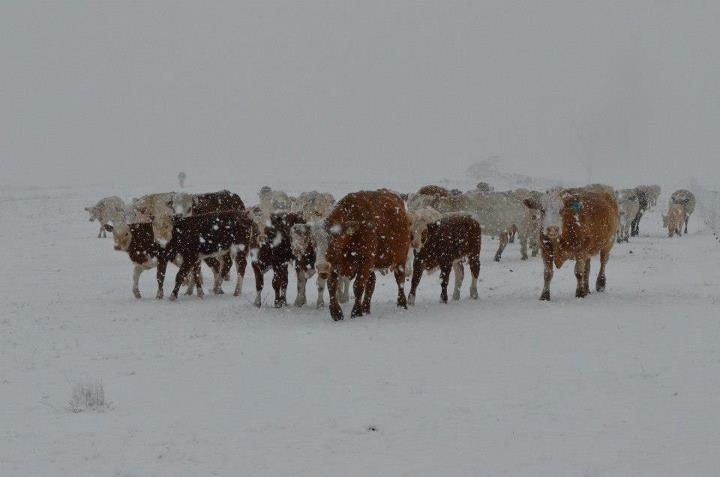
Last weekend saw blizzard conditions and gales in southern NSW and Victoria.  The Central West and parts of the Northern Tablelands had plenty of snow and sleet.

IMG_0006.jpg

While winter in Australia may not be as harsh as winter in other countries, it can still be pretty challenging for livestock.  

This image was captured at Guyra on the Northern Tablelands of NSW by the Ray White Team.   

Snow, sleet, rain and cold winds form a pretty nasty combination of conditions for your livestock.  If you run a sheep enterprise you know these conditions can be fatal, particularly for lambs or for sheep off shears.  

The Bureau of Meteorology provides an excellent warning system for these weather events.  Sheep graziers alerts are critical in preparing to manage cold spells.  

But these warnings are not just for sheep graziers!  If you have livestock, you should act accordingly.  

In conditions such as these cattle can suffer just as badly as sheep.  If you have an early calving herd, or cows in Fat Score 2 or below, your cows are just as much at risk as your sheep.  Wind chill can particularly effect your cattle and cows without sufficient body condition can struggle to cope with conditions.

To manage these conditions, you need to plan early.  Moving cows to more sheltered paddocks will limit the wind chill effect and help them avoid the worst of the weather.  Its often a few degrees warmer in shelter, particularly if cows can keep out of the wind.

r1044680_12075365.jpg

Its also important to assess your feed options.  If cows have access to plenty of roughage or dry standing feed, this will be a great help.  The process of digestion on roughage releases a lot of heat, and that helps cows see out the worst of the cold.

If you have been feeding your cows, hay is the best option to manage the cold snaps.  As with paddock roughage, the digestion of hay releases plenty of heat.  Hay is a much better option to feed your cows during snow, or wet cold conditions than many people may realise. 

20040620_ShootersHillSnow.jpg

Fortunately for most graziers the snow won't last weeks! However if you are unprepared a snow event, or even a very cold wet and windy period can result in livestock losses.  

Several years ago I remember Brahman cattle were bought from the Gulf Country to the Northern Tablelands in July.  The day after they arrived it snowed!  Unfortunately there were losses among those animals.

Planning ahead by providing some plenty of hay and shelter may have helped these animals cope with conditions much better than they did. 

More importantly prior planning factoring in the weather and its effect on light cattle may have meant the cattle would not have been delivered to the Northern Tablelands in a period when snow and sleet were likely to occur.

I've heard it said "there's no such thing as bad weather. There's only the wrong clothes!"  Well I reckon for graziers, we can't avoid the weather, we just have to adapt.  And if you can plan early, you can minimise the effects the cold and help keep your cows warm this winter.  

Should I start a beef cattle stud?

In the last few weeks I've had a few enquiries from people keen to enter the beef industry.  The want to start their own beef breeding programs.  Among the questions they are asking is the one "Should we start a stud?" 

I'm asked this question more often than many people would think!  Its generally asked by people new to the industry and excited about breeding cattle.  It can also be asked because their is a belief that operating a small stud might be a way to generate higher returns from a small beef program.  

So there are a few ways I try and answer these questions.  One of the first ways is to ask "why do you want to operate a stud?"

BoDuz_ECcAEu4e8.jpg

I'm generally not surprised when people struggle to answer this question.  I reckon its a question worth considering, particularly if you are entering the beef industry.

Operating a stud herd, or if you prefer, a seed-stock operation is a big undertaking. These operations are responsible for identifying and producing genetics that can have a major impact in individual herds; on breed direction and ultimately the productivity of the national herd.  

Genetics offer a permanent and cumulative effect on a population.  In simple terms, the genetics produced by individual studs can have a long lasting impact on future generations.  

Seed-stock producers therefore have a pretty big task.  They have to identify and record pedigrees and animal performance across their herds.  They need to collect data which can be used to contribute to the Estimated Breeding Values (EBVs) used by the breed and industry to select sires for use in breeding herds.  Seed-stock producers also need to be determined to select animals which not only have genetic potential but have the physical characteristics desired by the industry.  

Its a pretty big responsibility.  It takes years of selection & focus to produce these animals consistently. Quite simply, running a stud herd isn't for everyone!

F1000003.jpeg

There's no doubt breeding cattle can be exciting and rewarding!  You don't have to be a registered stud to enjoy the satisfaction of breeding outstanding animals.

For new producers starting a beef enterprise, operating on a commercial basis allows much greater flexibility and opportunities. 

The most important point to remember when commencing a new beef enterprise is to purchase structurally sound, fertile cows.  

There's no doubt this type of cow can be found in commercial herds as well as in stud herds.  Its just that sometimes its easier and often more economical to find them in commercial herds.  

Running cows on a commercial basis, avoids having to register a herd and assume a higher level of administration which is essential to record animals and production data.  

Choosing not to start a stud doesn't exclude you from being a member of a breed society.  Most breed societies offer membership to producers as commercial members.  This allows you to share the information from a society and to get to know the stud breeders who have been working at selecting genetic improvement over a number of years.

History_CattleHereford1941.jpg

Stud breeding is a pretty demanding undertaking. If it isn't going to be a full time undertaking for new producers, I'd suggest it shouldn't be the first enterprise choice!

If your desire to be a stud breeder is simply to allow you to compete in a show, remember it is possible to compete in agricultural shows without being a stud breeder.  Most local and regional shows have competitions for commercial cattle and for led steers.  These competitions are just as fiercely contested and as challenging as the breed classes for stud animals.

Ultimately breeding cattle is rewarding, exciting and challenging.  It can be intensely satisfying and fulfilling.  If you are entering the industry I'm positive you will experience this enjoyment regardless of your cows status as stud or commercial!  

Top tips for Junior Judges

Junior judging competitions are one of the most important activities for agriculture.  These competitions are often the entry point for many people into their chosen agricultural industry.  It doesn't matter if that industry is cattle, sheep, poultry or alpaca!  For me, junior judging was the start of my career in agriculture and so its one form of competition I'm always very eager to support.

IMG_6829.jpg

I reckon its important to recognise junior judging competitions offer more than simply a format to demonstrate your ability to judge and place animals or entries.  

These competitions are a fantastic way to refine your ability to make decisions, to demonstrate your capacity to present arguments or a reason behind a decision and give you a great way to improve your confidence as a public speaker.  These are all skills that are highly valuable in your career, even if you don't go on to do a lot of judging in the future.

When I do have the opportunity to judge the junior judging competitions, I try to spend some time providing competitors with some ideas and suggestions to bear in mind in future competitions.  

Over the next few months there are a huge number of junior judging competitions coming up, and I thought it might be a good time to share a few tips with potential junior judges.

Screen Shot 2014-06-26 at 11.25.04 am.png

Tip 1:  Practice speaking into a microphone at home!  Holding a microphone seems to distract many people.  Combined with the nervousness that is already associated with public speaking this seems to really derail some peoples presentations.  So practice speaking into a microphone, holding it close to your mouth and get comfortable with the concept of holding and moving while speaking.

Tip 2: Learn to describe the exhibit. As a judge you are being assessed on your ability to describe the exhibit, and the traits you think are important.  Don't make stuff up!  Don't use jargon, particularly if you don't really understand it.  Its much more professional to speak and describe an exhibit with correct terms.

IMG_7171.jpeg

Tip 3: Make a proper comparison.  Judging is not simply placing exhibits in a ranking order.  Judges need to be able to describe what they are looking for and why their choices are placed in the ranking the judge has chosen.  Part of that is to compare exhibits.  You must be able to say why 1st place is the best.  And you have to say why the 2nd place is there.  

Don't skip over the comparison between the entries. I reckon the worst form of comparison is to describe an entry as being "overpowered on the day!"  Ask yourself, what does that mean?  If the entry was underweight, less well grown, less muscled, poorly structured, what ever the reason for it being more lowly raked, it should be said, and not hidden in this meaningless phrase!

5536796-3x2-700x467.jpg

Tip 4: Dress Appropriately! Judging is an honour.  Its not everyday that you will be asked to make a comment on peoples hard work in breeding, preparing and exhibiting.  

To respect the effort exhibitors put in, you need to present yourself as a professional.  Your appearance indicates you care, and it illustrates you want to convey opinions which are considered and helpful.  

Dressing correctly conveys your intention to be taken seriously and respectfully.  Its hard to take seriously the opinions of someone who can't be bothered to wear clean clothes, or even to wear their clothes neatly.  If they don't care about their appearance, do they care about their opinions and comments?

So make sure you wear good clean pants (not jeans); a clean ironed shirt and for men a tie.  You should wear a clean jacket. If you're at school there's nothing wrong with the school blazer.  If you are wearing a hat, which is mainly for cattle and horse judging, it should be a wide brim and clean hat!  The black yard hat covered in mud and dung looks terrible!

Tip 5: Make your decisions & use your time to get reasons 

As a member of the Australian Intercollegiate Meat Judging Team we spent several weeks training before the US competitions.  One of the lessons I was taught was to make your decision swiftly.  

youth1.jpg

Generally as a judge you know pretty quickly which order you will place a class.  So make that preliminary decision and spend your time on why - that is what are the reasons behind that placing order.

If you do this it may help you be certain you've got the order correct.  It will also help you be much more confident in your preparation to answer questions or to present your reasons to the judge of the competition.  

Tip 6: Enjoy yourself! Junior judging is a great opportunity.  Don't put yourself under so much pressure that it becomes a chore or something you don't enjoy.

Judging is a skill.  Like any skill it has to be developed.  The more you practice the more confident you will be.  look for the opportunities, listen to the feedback, think about the things you would like to do better and practice those things.

IMG_6813.jpeg

The Final Tip: Look for opportunities!

If you want to develop as a judge, or you'd like to be more involved in judging in your industry, junior judging competitions can only take you so far.  If you are keen, get involved in your local show society and get to know how shows operate.  

Make contacts with the judges in your industry.  Perhaps there are opportunities to be an associate judge where you can learn and refine your skills.  Don't overlook the opportunities to learn new skills, particularly by attending industry youth activities.  Its always a work in progress, but all judges started somewhere and if you keep at it, you will find your place in the industry of your choice.

What I've learnt from pregnancy testing!

Becoming an accredited pregnancy tester of cattle is one of the best decisions I've made so far in my business.  Pregnancy testing certainly isn't glamorous!  Its dirty, smelly, and when you're testing herds in late summer its hot and tiring. 

Having said all that, its pretty amazing what you can learn when you go about it.  

IMG_6225.JPG

Obviously pregnancy testing will give you a pretty thorough understanding of the fertility levels within a herd, and after a while a snapshot of the district fertility.  

For a producer, knowing the pregnancy rate is vital if you are going to make decisions for the next few months on stocking rate, feed requirements, new bulls, culling unproductive cows and forecasting a cash flow.

For me, actually being involved in the testing has given me some big insights into how I can help producers manage those decisions.  There is nothing like looking at every cow pretty closely to build up a series of recommendations for the management of the herd, nutritional management and selection of the right bulls for the program.

I reckon the practical application of pregnancy testing coupled with a broader management understanding and industry knowledge makes my involvement in the programs direction much more solid.  

Having said that, I've learnt a few more important things.  Much more practical, and I reckon they are worth sharing.

My first question when I am asked to come and do pregnancy testing (after I ask how many cows are we doing) is: 

  • What are your yards like?

How well cattle move through yards basically determines what sort of day I'm going to have!  I charge my pregnancy testing on a per head basis, not on an hourly rate.  So I do like to keep moving which suits me, and it suits the producers I'm working for.

Well designed yards, with a race that allows cattle to move through without turning around and bunching up makes a huge difference!  Having a drafting puns and a forcing pen into the race that encourages cattle to flow smoothly makes so much difference.  

I really notice a difference in the behaviour of the cattle as well.  If they can be moved without hassle, the process seems to be smoother and quicker.  If they have to hunted and pushed, they seem to be much more excitable and this impacts on the time taken to test the animal.

  • What's your crush like?

A good crush is the most important part of handling cattle.  Something that is safe to use, restrains cattle safely, and has a vet gate are to my mind the 3 most important features on a crush.  

Often I am controlling the animals entry into the crush, so I want to have a slide gate, that is smooth and quiet.  I like to have a handle which I can operate to open the bail from the rear of the crush.  I don't like the handles which can unlock and swing down loosely when not in operation.  I reckon, well I know, there are times when you can't catch a beast with those handles, because they've slipped off the lock.

IMG_5954.jpg

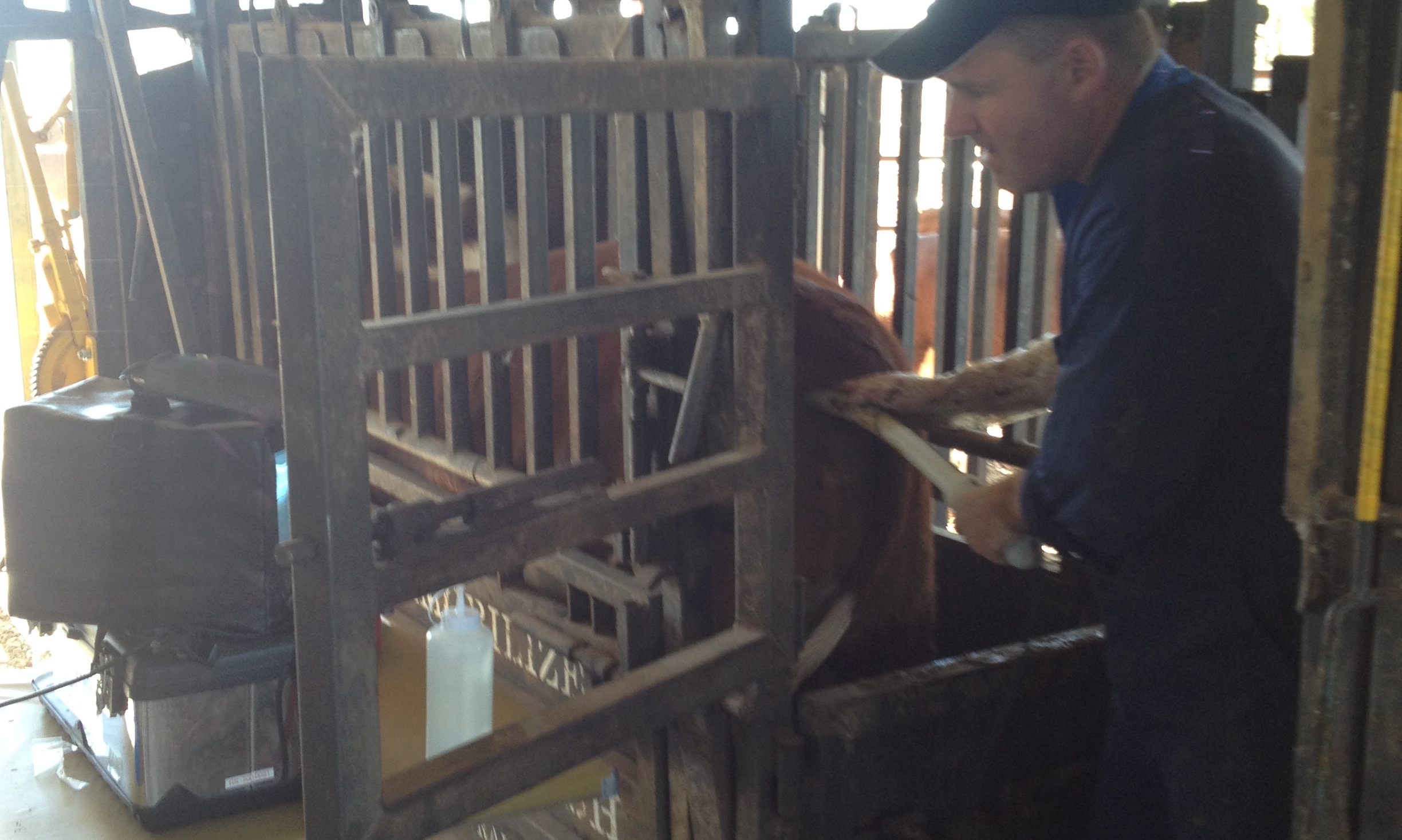
A vet gate is vital, because I have to stand in behind the cow, and I don't want to be kicked or crushed by the animal.  I also need to protect the ultra sound equipment!

Ideally I like the gate to have a spring loaded catch so I can kick the gate shut behind the animal and step in.

I've also learnt the importance of WD40!  Spraying some on the catches and slides at the start makes a huge difference to the process.

I generally find now, I look at yards in a completely different way.  I'm looking for jam points in the flow, and for the way the crush works.  I can pretty quickly work out if the day will work well.

The great thing about these practical lessons is they have enhanced my understanding of good yard design and good handling practices.  It has helped a lot recently with two clients rebuilding their yards.

The other thing I've learnt, is the importance of selecting for temperament and for educating your cattle. We know temperament is a highly heritable trait.  So removing the cattle with poor temperament will lead to improvements within the herd.  

But I reckon you can't rely only on genetic selection!  Cattle can be educated to work through yards, to flow through races, and to work through a crush without getting too upset or stirred up.  Quiet cattle, or at least ones which flow through the yards make pregnancy testing a more efficient process.

Its not all about me!  Better temperament has positive effects on general handling and most importantly on eating quality.  These are vital traits every herd should be looking to select for and work on, regardless of your breed choices.

BjCkz6WCIAAG-tc.jpg

As I said earlier, gaining accreditation to be a pregnancy tester of cattle is one of the best things I've done with RaynerAg. 

I love that I'm providing a practical service with immediate results.  More importantly I value the chance to use this derive to build plans with owners and managers which can lead to improved productivity and profitability. 

And I've learnt a few practical tips about yards and crush that I can apply in quite a few situations!  I reckon that has to be a win win situation!

Nice to know, or need to know?

This morning I was listening to a radio interview on the opportunities for careers in agriculture.  The person being interviewed talked about the wide varieties of roles there were in agriculture and in particular the roles for people to give farmers new information from the research and science being done in agriculture.   

I've been thinking about that interview for a few hours now!  I admit I was troubled by some of the points this person made in the interview.  I agree there are exciting and amazing opportunities in agriculture to build a rewarding and fulfilling career and life. 

I'm struggling with the assumptions made by this person that helping farmers is just about giving them information or the results of scientific studies.  This person was obviously talking about the role for people to build a career in agricultural extension.  To simply describe extension as taking research and giving it to farmers is pretty outdated and doesn't reflect what agricultural extension should be.  I also think its pretty insulting to farmers. 

Queensland_State_Archives_1720_Department_of_Agriculture_and_Stock_Cattle_Husbandry_Branch_field_day_at_a_farm_in_the_Upper_Coomera_Gold_Coast_August_1954.png

Over 50 years ago, extension used to be described in this way.  Farmers were seen to be devoid of knowledge of best production practices and desperate for new research.  The extension process was seen as a way of filling farmers full of new knowledge and better practices.  

This then lead to people describing farmers as being innovative, or early adopters, or laggards when they didn't take on the new ideas.

The worst thing about these labels, I reckon, is the unfairness of them.  In their lives people make decisions about how to go about things, based on a range of reasons.  These include the information or knowledge you have.  But it is also the practical application of knowledge, the time it takes to do something, how much it might cost or what has to be given up to do something new.  

Its no different for someone deciding on a new TV or a new way to do business.  These motivations underpin why people do what they do and when they do it.

In agricultural extension terms, there are two things we can do.  We can make people aware of new information.  Or we can work with producers and others to put new information into practice.  

I get worried by people who think all that needs to be done is to tell farmers about new information and thats all that they need to do.  I call that the nice to know approach!  Field days, seminars and newsletters are handy ways to share the nice to know things.  

DSC00068.JPG

There's a huge difference between nice to know and need to know!

The stuff that is need to know are the practical things to make information work properly, safely and efficiently!

Things like:  

  • How do I feed this product - not just how much?

  • Will this feed effect my market strategy?

  • What do I put on the Vendor Declaration?

  • Can I do it this way instead because I don't want to buy new equipment..

The list of need to know questions can be quite long with new research, or it can be really straightforward.  The thing is, the need to know part of extension is pretty important.  It takes trust in the person helping you.  It also means trusting the farmer you are working with to share their thoughts and actions, so you know you are getting it right!  

You have to understand the practicalities of someones business and the realities of the industry which can be very different to an academic or theoretical understanding.

So what does this mean really?  I guess it means that if you want to build a career in agriculture based on sharing knowledge and information, you will have to be able to do more than just run a field day and promote the nice to know information.  It takes time to build knowledge and experience so you can work to share the need to know with farmers and industry.  

For farmers, I think the bigger challenge will be finding people you can trust to work with you on the need to know subjects. I'm continuing to work with many producers on these subjects.  Each time we do a job, I know a little bit more of the need to know things, which in turn grows to help everyone I work with in the future.

I think listening to that interview today reenforced my desire to be the person farmers turn to when they are looking for someone to help make changes in their businesses.  I want to keep being the "need to know" advisor.  As long as I keep doing that, I reckon the people paying me to work in their businesses will continue to get the service they want and need, and I can keep my rewarding and fulfilling career in agriculture.

Are you coming to our bull sale?

There are some questions which seem to be, in current terms, the trending questions.  I've shared a few in recent Rayner Reckons.  The latest trend is associated with the upcoming round of northern NSW bull sales.  I'm pretty sure most people have been asked "are you coming to our bull sale?"

In my previous career with the NSW DPI, as the District Beef Cattle Officer, getting out to bull sales was an important part of the job.  There were a few reasons for this.  Being at sales gave me a chance to catch up with producers, see what was happening in the seed stock sector, and get a feel for the optimism people had for the year ahead.  

IMG_5302.JPG

Being at a sale was also a great opportunity to talk to producers about how to understand EBVs; what to look for in structure or muscle and even to create some discussion about target markets.  

In many ways being at a sale also helped the vendors.  

There's no doubt the lead up to and the morning of a bull sale are some of the most demanding times bull breeders will face.  They need to speak with existing clients; meet and get to know new clients; make sure the agents are fully briefed on the day and arrange countless other things to make sure the sale goes to plan!  

So having the local beef cattle officer at the sale was a good thing.  The vendor & agents would often encourage producers to chat to me about those things such as EBVs or the merits of bulls, confident their clients were getting good reliable advice which may help producers buying bulls at the sale.

In developing RaynerAg, attending bull sales is still one of the key services I like to undertake.  However, I've had to make some decisions about how and why I go to sales.  The simple matter is my business is to provide advice to clients to help them run their business more effectively. When I attend sales now I have to do so to provide that service, and I now have to make that a business decision.

IMG_5200.JPG

Quite a few bull breeders have asked me if I will be coming to their sale this year.  

Several have offered me an opportunity to receive a rebate if I bring clients along who purchase bulls a the sale, similar to that offered to agents introducing new clients.

I've actually chosen to decline this offer.  

I'm determined to offer my clients advice which is independent, and not driven by the need to earn  commission on sales, be it bulls or animal health products etc.

Instead I've offered the vendors an alternative suggestion.  For a fixed fee I will attend their sale day and be on hand to provide purchasers with advice on the bulls.  This includes understanding EBVs, comparing bulls in the catalogue, caring for the bull when it is delivered, as well as other questions the purchaser might have.  Because I'm not working on a commission purchasers can feel confident in asking me to compare bulls and also to present advice which is truly independent.  

1579468.jpg

The vendors can also feel comfortable knowing that they can steer clients towards me to address their questions and concerns about bulls.  This just gives the vendors a chance to work through their sale day with some more support and be confident their new and existing clients are not being neglected!

I reckon this service may not be for every bull seller this year.  However for the breeders I am working with, they have told me their clients were happy they had the option (if they wanted it) to seek some help or to bounce some ideas off when looking at the bulls in the catalogue.

I'm looking forward to the sales I'm going to this season.  I definitely looking forward to continuing to help producers and bull breeders achieve their goals in buying and selling bulls which will make a positive difference in beef enterprises in the next few years.

So hows RaynerAg going?

A few weeks ago I wrote in Rayner Reckons the most common question I'd been asked was "so how was the show?"  That question has definitely been overtaken by another genuine question, "so hows RaynerAg going?"

BoDuz_ECcAEu4e8.jpg

The short answer to that question is simply, its going well!  

I know I have shared some of the highlights for the past 12 months, so in many ways I've had a chance to reflect on how RaynerAg has been developing.  

Taking time to review progress is important for any business.  Its one of the things I do with the RaynerAg clients.  However, the review is only part of a business plan.  I think knowing your goals and working towards them are also important.   

Having business goals is essential.  I also think you should review your goals occasionally and see if they are still relevant, or appropriate for you, your business and for your clients.  

How we measure things is also important.  Just recently I read an article discussing issues surrounding Key Performance Indicators (KPIs).  It seems like every organisations has KPIs these days.  As a tool they can be pretty useful to help keep things on track.  But like any tool they can also be misued used and the source of problems!

I occasionally see people who are very caught up in achieving their KPIs, for example meeting their pasture growth targets.  The problem occasionally is, they are so focussed on the KPI, they forget the whole point of growing that pasture was to produce more kilograms of beef per hectare!  

Setting goals, and using KPIs to monitor how you are going is good business practice.  Equally important is taking time to review if it is actually working and still suited to your own personal goals.

So whats ahead for RaynerAg?  I haven't actually set any KPIs!  However, I do have some plans which I'd like to achieve in the next 7 months.  

  • I'm delivering two 1 day courses for show stewards. These will focus on the skills needed to run judging rings. Skills such as arranging a schedule, marshalling cattle, scoring classes, presenting ribbons, ring craft & public speaking.

  • I'd love to have all 40 places in these courses taken up, and requests for three more before the end of the year!

  • This August I will be arranging a Field Day designed to update producers on the best techniques to manage their cows through calving and provide latest industry research. Its been a while since I've held a large field day and I'm looking forward to planning and holding this one

  • I also want to establish a beef producers group, focussed on livestock assessment and monitoring compliance with target markets.

And most importantly, I want to keep working closely with producers to find the most effective ways to improve their business operations and help them make a little but more money!

Next time I'm asked how's RaynerAg going, I'm going to say not just that its going well, but the next few months look pretty exciting! 

How objective are you when looking at your bulls?

If you're a bull breeder, there's no doubt you have one of the more challenging roles in the beef industry. As a breeder you're producing bulls that will contribute to the genetic potential of a breed and more importantly, your bull will have a direct impact on the production of beef across the business of many people. 

Its not an easy task, as you need to manage the variation which naturally occurs in any population. This variation extends across frame size & maturity pattern, growth, muscle, temperament as well as well as other traits.  

BNFhSyVCIAEDwcv.jpg-large.jpg

To some extent this natural variation is a good thing.  It allows you to present bulls for sale for producers who all have different requirements bulls, based on their own cow herd, environment or target markets.

The ability to measure and record the genetic potential of your bulls, and present them using BreedPlan EBVs is a huge advantage for bull breeders.  As I've discussed in other Rayner reckons, EBVs allow producers to search for bulls which have the genetic potential to take a herd in a new direction or to strengthen the traits most desirable ion a breeding herd.

EBVs offer an objective measure of the genetic value of a bull.  The measurement and evaluation of the traits recorded in BreedPlan does provide a level of objectivity which producers can look to when they are seeking to buy a new bull.

IMG_7211.JPG

However there are some attributes a bull has, which can't be assessed from EBVs. For instance, what are the bulls feet like? Or what is his muscle score?  How are his legs and shoulders?  What does his sheath look like?

These are important physical traits which can have a big impact on a producers cow herd. A bull with less than ideal feet can possibly make a problem worse in a herd.  

Selecting for muscle score is based on a visual assessment of the overall muscle volume of the bull.  There is a correlation with the EBVs for Retail Beef Yield, but a visual assessment can make a decision on the suitability of a bull to improve muscle score in a breeding herd that much easier.

Many bull breeders have attempted to address this need to assess the physical attributes of their bulls by including photographs of the bulls in their sale catalogues.  These photos can highlight some of the obvious characteristics, but as one producer said to me "you can only tell so much from a photograph".

Objectively describing your bulls to potential clients can also be a challenge.  Your opinions will be part of the overall information a producer absorbs, but some clients want to see more objective descriptions of a bulls physical attributes.

To help bulls breeders provide this objective information many breeders are now supplying information categorised under the Beef Class Structural Assessment Scores. These scores are based on on the structure of feet, legs, sheath & temperament.  

Screen Shot 2014-05-01 at 10.58.52 am.png

Providing these scores in your catalogue can demonstrate to potential purchasers that each bulls physical attributes have been objectively assessed and scored.  

These combined with the genetic information of the EBVs certainly give a purchaser a level of information which ensures they can make very informed & focussed decisions.

Naturally purchasers should still look at the bulls they are interested in to ensure traits such as frame or the maturity pattern of the bull will complement their herds. 

I reckon providing this information for each bull allows purchasers to narrow their search down to specific bulls in your catalogue.  It also demonstrates to your clients how focussed you are in providing the best information on your bulls, to help them make the right decisions.  Its often your focus on providing the right animals which will see a client buy your bulls year after year.

As a bull breeder don't be afraid to use an independent specialist to assist in the objective assessments. I have been doing a lot of bull assessments and its common to notice things the breeder has overlooked, simply because they see their bulls everyday and miss something out of familiarity.  

If you're interested in providing some more objective information on your bulls this year, don't hesitate to give me a call.  I'd be very happy to make a time to look over your bulls to help you provide the information which can not only attract new clients but can also satisfy the needs of your existing clients.

So how was the show?

Without doubt, the most frequently asked question I have had to answer in the last week is "So how was the show?"  For such a simple question I have had a fair bit of difficulty answering.  

Its not just that some questioners want to hear about the entertainment side of the show - the show bags, the night show, the novelties that make the show appeal to a huge cross section of the community.  For others it is how were the livestock on display.  What breeds and studs did well?  Did local studs exhibit and was their hard work rewarded?  

And other people are interested in the social side of things, the functions, the socialising in the members, who was there and who wasn't.

The Sydney Royal Easter Show, one of the oldest and largest agricultural shows in Australia is many different things to people. In my case the show is actually huge part of my life. 

RAS_Grand_Parade_2001_composite.jpg

My earliest show experience was as a small child, visiting the show with my dad and brothers.  

I don't remember much besides huge crowds and watching the night show. 

At school, developing my passion for the beef industry I prepared steers which we exhibited at Sydney.  My involvement with the show was increased when I was awarded with an RAS of NSW Rural Achievers Award.  This gave me the opportunity to become involved in subsequent shows as a steward in the beef & dairy judging rings.  

As one of the NSW DPI carcass judges, I was invited the judge the carcass competition for the show for 13 years.  My role as a carcass judge came to an end when I was appointed as a Councillor of the RAS, and I had to take on roles in organising the competitions rather than judging them.

The show for me is a huge commitment in time and involves a huge amount of work in the lead up to the two weeks of showtime, and even bigger days when the show is on.  So the first thing I think of when I'm asked how was the show, is that it was big and that I love it!

Now that the show is over for another year, I have been thinking about what it is that I love.  Without doubt I love being part of the judging.  I get a chance to be up close to some of the most outstanding animals bred and prepared by passionate breeders from across Australia.

IMG_6782.jpg

I love listening to the judges, to hear their comments and experiences which reflect on how they select animals to win broad ribbons from Sydney.  

So maybe the answer I should give when asked, "how was the show" could be, that it was amazing.  I saw the Red Angus breed claim a third consecutive Hordern trophy.  

IMG_7190.JPG

I also saw an outstanding Jersey cow from Tamworth claim the Supreme Dairy Cow award for a third year running.  Now that says a lot about the breeder and their focus on production and performance, and it was a win people will be talking about for a long time.

Lots happened on the cattle lawns throughout two weeks of judging.  However my show commitment isn't just to the cattle programs.  

One of the most rewarding of my roles is to be involved with the newly established Youth Affairs committee.  Youth Affairs supports activities such as the highly respected Rural Achievers Award & Showgirl competition.  

IMG_6923.jpg

It also overseas the activities of the RAS Youth Group, supports the Young Farmers Challenge and is responsible for co-ordinating the Youth in Agriculture Day on the last Saturday of the Show.

Youth in Agriculture Day is one of my favourite days of the Sydney Royal Easter Show. This day lets us focus on the opportunities for youth to be involved in the show, undertaking official roles such as stewarding, judging, through to major roles including the main ring broadcasting & announcing. 

We are supported by a group of passionate people from all sectors of agriculture who spend their day interacting with the public and with competitors, highlighting their commitment to their agricultural industries and demonstrating agriculture is a vibrant and exciting career direction.

This year with the support of the President and Senior Leaders of the Royal Agricultural Society we introduced a new activity, where several of the key members of the RAS Youth Group spent their day shadowing those leaders in their role during the show.

IMG_6891.JPG

I reckon these activities are some of the most important of all my show commitments.  I find the passion and enthusiasm of the ambassadors, the Youth Group and of students showing and competing infectious.  

I'm constantly reminded of my early steps into a fulfilling career in agriculture started through junior judging and bringing steers to compete at Sydney.  

Without doubt its exciting and encouraging to see people sharing a passion for agriculture and for supporting each other in developing their careers.  Its very hard not to be rejuvenated and enthused about the opportunities to share ideas and knowledge after a day with the team from Youth in Agriculture.

IMG_7171.JPG

This year I spent a lot of time as a steward on the cattle lawns and in the Alpaca rings.  

I don't know much about Alpacas or how the judging process works, so I was keen to learn. Watching and listening to the RAS /ASC State Junior Judging finals for Alpacas, I learnt more from the 9 finalists than I had in two days watching the judging.  

There are some amazing young people involved in their agricultural industries who are knowledgable, articulate and passionate. It's exciting to think of these people taking that enthusiasm and knowledge to build a stronger industry into coming years.

"So how was the show?" I reckon I will tell the next person who asked me that, that it was amazing.  There are some fantastic, passionate people who bring the products of their agricultural businesses and put them on display to show the nation just what we do in agriculture.  There are amazing young people developing careers and a network of ideas and goals which will make Australian agriculture an even more exciting career choice.  I'll tell people who ask me, I love the show, and that I'm already looking forward to next year!

10157121_10152020076360373_905370657980609648_n.jpg

Do you love your sheep, crops or pastures more than your cattle?

I love the Sydney Royal Easter Show!  I first went to the show with my family as a little kid.  I don't really remember much of that first experience.  In high school I showed schools steers and eventually I had a chance to participate as a steward, judge and now as a Councillor of the RAS of NSW.  If anything stands out to me when I think of the show, I think of the friendships of people and the sharing of advice and information.

I look forward to seeing old friends and catching up.  This year is no exception, and its been very humbling to have plenty of people genuinely interested in how the business is going, and how I'm finding working for myself.

One of the discussions today did get me thinking,  Several of us were talking about the business and I was asked for my take on why farmers seemed to be happy to seek external advice on most aspects of their businesses, with the exception of their cattle enterprises.  I wasn't too sure what that meant.  But the comparison was against sheep enterprises.

00g02053.jpg

Many sheep enterprises not only use a sheep classer, but they rely and often depend on the views and decisions of the classer. As I was told today a classer can make or break an enterprise.

Similarly most businesses now have an agronomist recommending fertiliser programs, species selection, crop choices and paddock rotations.

Most businesses also use an accountant or a book keeper to help with the smooth running of the enterprise.

So why are beef enterprises different?  I was asked by these producers today why do farmers willingly allow someone to choose their sheep, crops and pastures, but never consider seeking the same external input into their cattle program.  I have to say if I knew the answer, I'd be struggling to keep up with demand!

I think the beef industry, particularly in NSW, had for a long time, access to the services of the Department of Agriculture's Beef Cattle Officers.  Now this service no longer exists, producers now have to find new independent advisers to provide some objective advice to their cattle programs.

All I could say to my friends at the show was the next few years will be a great chance to develop a relationship with a person who can provide input into a beef program in the same way sheep classers or their agronomists offer the other parts of the farm business. 

I definitely don't think people love their cows less than sheep, crops or pastures!  I reckon its just we are all looking to find people who can share advice and ideas to take us to the next level.  For me, I'm already working with some great producers.  Its a bit exciting to think I might get a chance to meet and work plenty more people in coming years!

Pasturefed Cattle, does it suit your operation?

This week Teys and Woolies have announced a greater push to have more cattle accredited as Pasturefed. The PCAS system, or Pasturefed Cattle Assurance System is a great opportunity for producers to gain some recognition for their feeding programs, as well as for their focus on handling and eating quality. 

I reckon its good news to hear of a processor and a retailer offering some financial recognition for producers prepared to seek accreditation.

F1000022.JPG

Having said that, I think its important to carefully consider what PCAS may mean for your individual enterprise.

There are 4 Core Modules for Certified Pasturefed.  The first is identification and lifetime traceability on the NLIS database.

The second is the animals cannot be confined for the purposes of intensive feeding for production.  

The third is cattle can be be pasture fed only.  That is they can never consume separated grain or grain by-products and have access to graze eligible diets.

The forth core component is animals must be produced on farm in away which allows them to be eligible to meet MSA requirements.

There are two optional modules which include HGP free and Antibiotic free.

Producers who seek accreditation will be required to undertake an annual third party audit to ensure compliance with the system.  The audit fee as well as an annual administration fee have to be paid by the producer.

Its important to consider carefully what these requirements may mean to the operation of your enterprise.  Most producers are currently capable of meeting most of the core competencies.  Pastures do underpin the majority of our production systems.  

However, under PCAS producers no longer have the option of using grain or grain by products to assist in finishing cattle off for a market specification system.  This also means during droughts, using grain to full feed cattle would no longer be an option.  There are also some restrictions on grazing crops as well.  Cattle can graze cereal crops but only in the pre-grain stage.  This could be an issue with grazing failed crops for some producers.

If you are considering PCAS as an option in your enterprise, I strongly encourage you to read the PCAS Standards, and particularly note the requirements for feeding, as well as the list of approved feeds and the banned feeds.

As with any system or accreditation process, you really need to consider the actual advantages and disadvantages for your individual enterprise.  Don't just focus on the potential rewards from one particular market.  Consider if the system restricts your flexibility to meet demanding seasons or alternative markets and if the returns justify those restrictions.

DSC00185.JPG

Most importantly, take the time to read what accreditation means to you and make an informed decision.  

I'd also encourage you to consider the other options which may be available to you to increase your returns without having to make huge changes to your program.  

In previous blogs I've talked about selection for muscle as well as targeting market specifications. These are practical and easily implemented options which can result in increased profits without having to change too much on farm.

If you are keen to seek accreditation or pursue other industry programs such as EU accreditation, or just obtain a licence to produce cattle for MSA, and you'd like some objective advice as to the advantages and disadvantages for your program, don't hesitate to get in touch with me.

What can you learn from the show ring?

How do you benchmark your livestock against other people?  Seedstock producers are fortunate to have Breedplan which provides breeders with a way of measuring and comparing the genetic potential of their animals through EBVs.  Without doubt EBVs provide a chance to assess genetic potential for the commercial traits essential to improving a beef enterprise.

So where does the show ring fit in todays commercial world?  As someone who has been involved in agricultural shows for over 25 years as an exhibitor, steward, judge and organiser, I think about this question a lot!

2008_cattle007_web_rdax_300x306.JPG

I reckon the show ring still provides plenty of learning for producers, either in showing their cattle or just from watching the events.  

Observing animals closely, as they walk around a ring, and as they stand still for judging, lets you get up close and personal to observe the physical characteristics which the animal has.  Questions like the shape and angle of feet and legs, the size of testicles, the placement of teats on the udder.  These physical features are as important as the genetic potential of the animal.  

Comparing animals of the same age and breed against each other gives you a chance to see how the animal has expressed their genetic potential when they receive the nutrition they require.  

Being able to compare your animals in an environment where you will be exposed to an outside opinion does challenge you!  But any challenge is also an opportunity.  It is a chance to see what your breed is doing, and to see if there is much variation in the breed type, as well as what your animals look like at the same age and weight as animals of other breeds.  

Its important not to underestimate the importance of networking with other breeders, and producers at a show.  The show ring remains an important publicity tool for your program and for the type of cattle you are seeking to breed.  Many producers are looking to make contact with breeders and to see how animals compare against each other.  Its part of the information gathering process many people undertake when they are looking for new genetics.

4874192-16x9-940x529.jpg

I find producers enjoy supporting their bull breeders at local, regional and state shows.  There is a degree of pride in seeing the breeder who supplies you with genetics, being prepared to display their animals and compete for recognition in a public arena.  

To me it, by exhibiting your livestock you are saying you are proud of your animals and are prepared to showcase them publicly which we all know can be challenging as you are exposed to public praise and public critique.

Generally most people will remember seeing you in the ring and remember the chats they have with you in the cattle sheds more than they will remember where you placed in the class.  This recognition and awareness can underpin your sale in coming months.

Judges at shows should be able to offer you an independent observation on your animals compared to their peers in a class.  True it is a subjective opinion.  But don't forget, people who haven't seen your animals before may notice something which you haven't really noticed, or because you see it so often, you take it for granted.  Most judges will be happy to chat after the event, so take the time to meet the judge and discuss their comments.  Its often the outside view that can help you piece together an idea which really benefits you in the long run.  

For me, the show, be it the local show or the Royal, is a chance to spend some time with people who are enthusiastic about breeding cattle and who have a vision for their business.  I look forward to being around passionate and enthusiastic people and I draw a lot of energy from them.

History_CattleHereford1941.jpg

The show ring does give you a chance to showcase your animals, to benchmark their performance, and most importantly, it lets you mix with people who will share ideas and passions which you can use to boost yourself towards new goals.